Showing posts with label Jazz. Show all posts

Thursday, August 29

On this day...


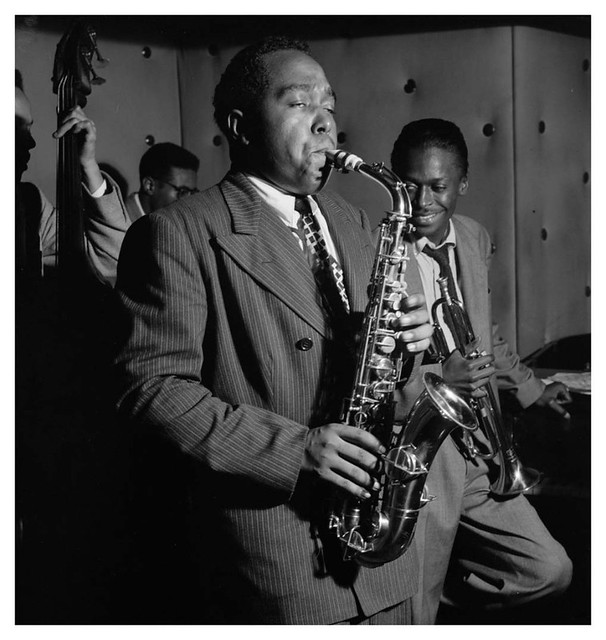
On this day in 1920, Charlie "Yardbird" Parker (aka "Bird") was born in Kansas City, Kansas, the only child of Charles and Addie Parker. Charlie's father was a pianist on the vaudeville circuit and was absent for much of his early childhood. Yet Charlie still followed in his father's footsteps, picking up the saxophone at the age of 11 and began to diligently practice in the late 1930's; in an interview with fellow musician Paul Desmond, Bird said that he spent 3–4 years, during that period, practicing up to 15 hours a day!

In 1938 Parker began his recording career with the Jay McShann Band, which he also toured with including stops in Chicago and his future home New York City. The following year Charlie moved to NYC, working as a dishwasher to make ends meet. It was in New York that Charlie met Dizzy Gillespie whom he would famously play with throughout the next decade. These early years in NYC were key to the development of Charlie's playing, including one of his main musical innovations - that the twelve tones of the chromatic scale could lead melodically to any key, breaking the confines of simpler jazz soloing. This style of playing, honed in the after hours clubs of Harlem, such as Clark Monroe's Uptown House and Minton's Playhouse, became known as Bebop!

"Music is your own experience, your thoughts, your wisdom. If you don’t live it, it won’t come out of your horn. They teach you there’s a boundary line to music. But, man, there’s no boundary line to art." - Bird


Saturday, July 20

A Centenarian down on Bourbon Street

Cool news story courtesy of the Associated Press about 102 year old Lionel Ferbos the oldest actively working musician in New Orleans. Play on Lionel!

Friday, April 26

Sweetwater interviews Chick Corea

Sweetwater's Mitch Gallagher interviews legendary jazz and fusion keyboardist Chick Corea in the latest Sweetwater minute:

Sunday, September 23

The Miles Davis Story

This week marks the 21st anniversary of the death of legendary jazz trumpeter Miles Davis. Miles is best known for his amazing album Kind of Blue, released in 1959, which is considered to be the best selling jazz record of all time and was honored by the U.S. House of Representatives on December 15th, 2009 as a national treasure. Davis passed away on September 28th, 1991 from respiratory failure onset from pneumonia and a stroke, his grave can be found at Woodlawn Cemetery in The Bronx.


Friday, August 17

On this day in 1959...

 
On this day in 1959 Columbia Records released Miles Davis' Kind of Blue, one of the most influential records of all time! Certified quadruple platinum by the RIAA, Kind of Blue was recorded at Columbia's 30th Street Studio in New York City in two sessions on March 2nd and April 22nd in 1959 by Teo Macero and Irving Townsend. The album features the first famous Miles Davis Sextet - pianist Bill Evans (Wynton Kelly on one track), drummer Jimmy Cobb, bassist Paul Chambers, and saxophonists John Coltrane and Julian "Cannonball" Adderley. The album abandons the major and minor key relationship predominate in western classical music and instead uses a modal base theory of composition that had been introduced to Miles thru George Russell's book Lydian Chromatic Concept of Tonal Organization. This style of playing based the improvisation on scales (instead of chord changes), freeing the soloist from the constraints of bebop.

"If you're trying to be hip, be hip!" - Miles Davis


Monday, April 9

Herbie's Smoking

Herbie Hancock is one of the only musicians I know that can make a keytar look cool:


via imagination

Saturday, December 24

Chick Corea on Analog Synths Live

Jazz legend Chick Corea talks about using Moog synths on the Return to Forever reunion tour:


"Chick Corea took a moment from his 2011 tour with Return to Forever IV to talk about the role of various analog synthesizers in his on-stage sound."
-Moog

Friday, September 23

On this day...


On this day back in 1926, John Coltrane was born in Hamlet, North Carolina. Trane is widely considered to be the greatest tenor saxophone player of the 1950's. Trane developed his own unique voice on the saxophone which Downbeat critic Ira Gitler termed "sheets of sound", which were extremely dense improvisational yet patterned lines consisting of high speed arpeggios and scale patterns played in rapid succession, running from the lowest to highest registers. In author Ben Ratliff's Coltrane: The Story of the Sound much is said about the strict practicing regimen Trane kept, sometimes practicing up to 8 hours a day! This discipline and beautiful playing is probably why he's the only jazz musician with a church, The St. John Coltrane African Orthodox Church in the Fillmore District of San Francisco. The inspiration for the church came one night in 1965 when Archbishop Franzo King and Reverend Mother Marina King saw Coltrane play and described the event as a "sound baptism". Coltrane would die just two years later from liver cancer, possibly onset by the addiction to heroin he had kicked years earlier. John's son Ravi is an accomplished saxophone player himself and will be performing for the next 3 nights at the legendary Village Vanguard in NYC, celebrating his father's birthday!

The Saxophone Saint:


Afro Blue '63:

Videos courtesy of Turnstyle Video and elmosaico

Sunday, August 7

Chasing the Trane

It was Ravi Coltrane's 46th birthday yesterday! Here he is tearing it up with the Ravi Coltrane Quartet:


Video courtesy of mati377

Thursday, July 21

Rio Loco : Getatchew Mekuria & The Ex

Legendary Ethiopian Saxophonist Getachew Mekuria performing with Dutch anarcho-punks The Ex & Brass Unbound in front of 18,000 people at Rio Loco in the south of France last month:


Video courtesy of arte LIVE WEB.

Thursday, June 9

Jazz Midi Files


One of the best ways to learn a new song is by studying the music. Being much more accustomed to DAWs than sight reading I like to import MIDI files and recently found a great site that features such files called Doug McKenzie's Live Played Jazz Midi Files. Doug McKenzie, no relation to Bob, is a retired college jazz music instructor from Geelong, Australia, so he really knows his subject matter, eh. Now to import these files into Reason you just need to open Reason and go to "File" (top of screen just to the left of Reason) and drag your cursor down to "Import Midi Files". The files from Doug's page sometimes include not only the piano parts, but drums and bass. You'll need to load appropriate combi patches for each sound - I really dig the "Electric Piano" bank in the Reason Factory Sound Bank for the piano parts. If you're interested in learning jazz piano you should definitely check out Doug's youtube page with videos of him playing along with piano notation! You can also buy a DVD direct from Doug's Site with over 170 jazz standards on it. These DVDs aren't copyrighted so teachers can copy songs off for their own students to learn. Cool!

Saturday, May 21

Maceo Parker Meets Moogerfoogers


Maceo Parker came to visit the Moog factory in Asheville, NC last week and treated us to an impromptu improv in the Moog Sound Lab. While Maceo wailed away we couldn't resist filtering and modulating his sound through the Moogerfoogers. Beginning with the natural sound of Maceo's Fresh N' Funky Alto Sax, we quickly hurdle into another dimension by adding the MF-101 Low Pass Filter to the mix. Crankin' on the Cutoff knob of the MF-101 Low Pass Filter draws out an analog "Wah" that allows for additional sonic articulations -- say, "Wah-wah What?!?" It is recommended to keep the Resonance & Mix on the high side to bring out the most color when using this charismatic extension of your horn's voice. The MF-102 Ring Modulator, and MF-103 12-Stage Phaser are being used here to add anywhere from subtle tremolo effects, to mild grit to the tones being passed from the MF-101 Low Pass Filter, and MF-104Z Analog Delay. The root of all Space-Funk is in our MF-104Z Analog Delay -- setting the Delay Time knob to a desirable tempo/pulse, and the Feedback knob to the desirable echo length, gives Maceo an analog canvas to work with that he can both apply color to, and take color from -- watch as he pauses to explore his audio imprint, then snatches it back to shape again. Rocking on the Delay Time switch, and tweaking the Delay Time knob at the end of Maceo's phrases twists his sound to an otherworldly degree, crea
-MOOG

Wednesday, March 30

Friday, February 25

Elevator to the Gallows


1958 French film Ascenseur pour l'échafaud
Staring Jeanne Moreau and Maurice Ronet

-SophyaAgain

Thursday, December 30

Billy Taylor R.I.P.


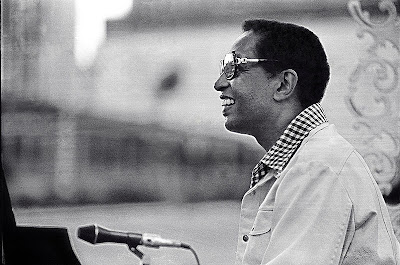
Jazz pianist, educator, broadcaster and composer Billy Taylor passed away on December 28th, 2010 at the age of 89 from heart failure. Born in Greenville, North Carolina, Taylor was the house pianist at Birdland, early on in his career, where he performed with the likes of Charlie Parker, Dizzy Gillespie and Miles Davis. More recently Taylor was the artistic director for jazz at the John F. Kennedy Center for the Performing Arts in Washington, D.C and the Robert L. Jones Distinguished Professor of Music at East Carolina University. Below is a video of Billy performing one of his most famous songs "I Wish I Knew How It Would Feel to Be Free" penned in 1954, the song gained notoriety with Civil Rights Movement of the 1950s and 1960s. R.I.P.


Photo courtesy of Tom Marcello
Video courtesy of JazzVideoGuy
Info from Wikipedia and www.billytaylorjazz.net.

Sunday, November 28

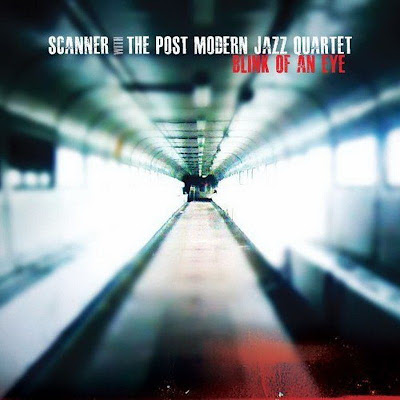
Scanner with The Post Modern Jazz Quartet


The blending of jazz and electronics has been one of the more difficult musical challenges, as it attempts to humanize the machine or mechanize the free spirit of improvisation. It's a very tricky balance to get right, as they can be on a collision course with each other. Bringing together the world renown electronic artist, Scanner who has collaborated with artists from every imaginable genre: musicians Bryan Ferry, Radiohead and Laurie Anderson with jazz masters Matthew Shipp, Khan Jamal, Michael Bisio and Michael Thompson has created a post modern sound encased in a traditional form. The results are unparalleled. Scanner becomes part of the PMJQ, creating cinematic textures that take a familiar jazz quartet sound and transforms it into a modern day experience in this world of bits and bytes.

Scanner with jazz masters Matthew Shipp, Khan Jamal, Michael Bisio and Michael Thompson.


Scanner with The Post Modern Jazz Quartet - Blink of an Eye by Thirsty Ear Recordings

Tuesday, July 7

Art History


As a respite from the recent Reason postings this evening I'd like to share with you one of my favorite jazz musicians of all time, Mr. Art Pepper. Art played with the same intensity that drove his life and lifestyle. Mr. Pepper spent a large portion of his adult life behind bars from drug related arrests. His playing conveys this... chasing the melody, chasing the dragon. Art Pepper and his widow, Laurie wrote a wonderful book on his life, called "Straight Life":

Straight Life

If you've never heard Art before I'd highly recommend starting with his seminal recording:

Art Pepper Meets the Rhythm Section

If you already have this cd, do yourself a favor and pick up the brand new release "The Art History Project". On Laurie Pepper's own "Widow's Taste" record label. 3 cds of some of the best jazz you'll find anywhere, played by a master:

The Art History Project

There's a great movie out on DVD called "Notes of a Jazz Survivor" on Art Pepper, here's a clip:


for more information check out:

Straight Life